
Ask a Doula: How to Find Support
These resources are designed to help people who are in the beginning stages of seeking support from an end-of life doula.
How do people do this without end-of-life doulas? I honestly don’t know what I would have done if the doula hadn’t been there. It is my personal belief that I would not have made it. My one wish is that we understood how much having support through that last stage would have helped us much sooner. We heard ‘end-of-life’ and said, that’s not us. End-of-life doesn’t start at the very end-of-life!
— D.C.
Interviewing an End-of-Life Doula
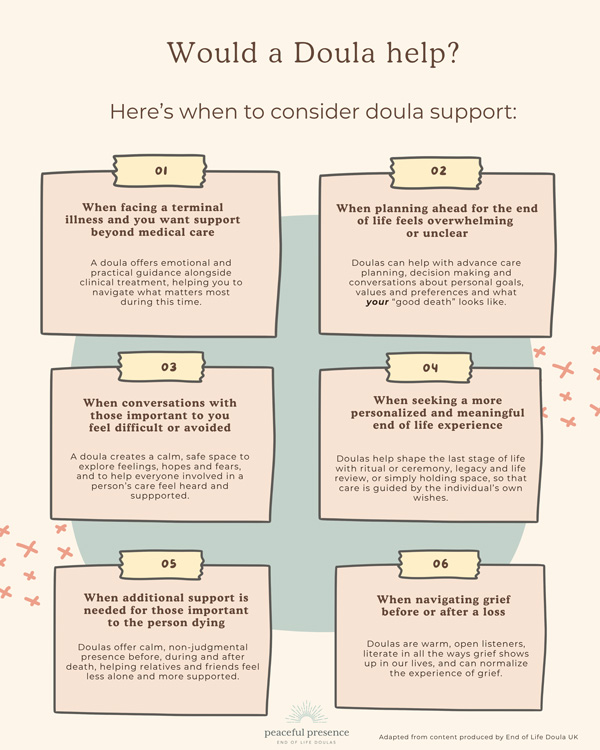
Working with someone who has experience with serious illness, dying and grief can be a wonderful support—and it is important to ask the right questions so you feel confident in that support. These questions are adapted from the National End-of-Life Doula Alliance and might be a good place to start a conversation about working together.

What training or experience prepared you for this role?

What types of clients or situations do you have the most experience with?

What specific services do you offer?

Do you collaborate with hospice teams, medical providers, or other caregivers?

How do you ensure you honor a client’s cultural, spiritual, or personal beliefs?

Do you offer support immediately after death and during the early grief period?

What are your availability and fees, and how does scheduling work?
Types of Support

Palliative Care
Palliative Care is based on the needs of the patient, not on the pathology or diagnosis. This type of care is focused on providing relief from the symptoms and stress of the illness. Palliative care is appropriate at any age and at any stage in a serious illness, and it can be provided along with curative treatment. This care can be provided in the hospital, a clinic, or a person’s home. Palliative care aims to keep you strong as you live with an illness.
Hospice Care
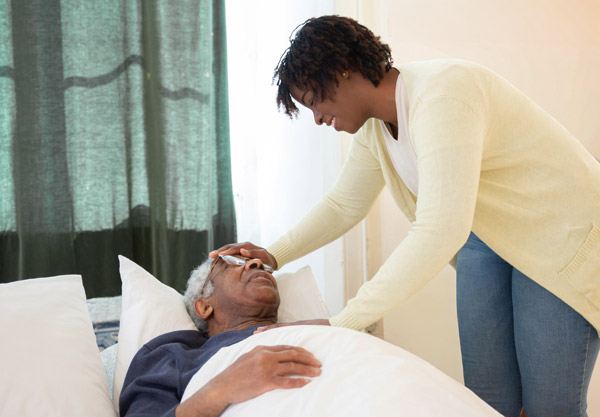
Hospice Care is a specialized form of palliative care, and available to patients whose physicians believe they have 6 months or less to live without disease-focused treatment. The hospice team typically consists of a physician, nurse, social worker, chaplain, home health aide, and volunteer. Hospice makes sure you are comfortable.

End-of-Life Doula
An End-of-Life Doula is a non-medical support person who provides non-judgmental, emotional, and practical support to individuals and their loved ones as they navigate serious illness and the end of life. Doulas can provide advance care planning, vigil planning and education about what to expect in the dying process, as well as direct, bedside support during the active dying phase.
Community Health Worker
A Community Health Worker (CHW) is a trusted frontline public health worker who bridges communities with health and social services, improves access to culturally responsive care, and builds individual and community capacity through education, outreach, support, and advocacy. All of the CHWs listed on this directory have received additional training in palliative care.